

When you take multiple medications, they don’t always work independently inside your body. A drug-drug interaction occurs when one medication alters the absorption, distribution, metabolism, excretion, or intended effect of another. In this week's video we look at three distinct ways medications clash—and why understanding them matters for your health.
I tried my hand at animation in the tool I know best: Power Point! I hope you enjoy the (bad) animation and the (great) explanation. This video is the first in a series on basic pharmacology and a small insight into how a pharmacist is thinking about how medications are interacting in your body.
Next week, I show you how to check for drug interactions like a pharmacist.
1. Competitive Enzyme Inhibition: The Liver Traffic Jam
The most common type of interaction occurs in the liver’s smooth endoplasmic reticulum, where Cytochrome P450 enzymes (such as CYP2D6) detoxify medications. Normally, CYP2D6 rapidly metabolizes dextromethorphan, the active ingredient in cough syrups like Robitussin DM or Delsym. However, adding bupropion—a potent CYP2D6 inhibitor—blocks this process because bupropion binds to the enzyme first. Unable to be broken down, dextromethorphan concentrations can surge 40 to 60 times higher than normal, reaching hazardous, toxic levels.
2. Same-Pathway: Blocking the Signal Twice
The Renin-Angiotensin-Aldosterone System (RAAS) controls blood pressure through a cascade where liver-produced angiotensinogen is converted by kidney renin into angiotensin I, which lung ACE enzymes convert to angiotensin II. While ACE inhibitors lower blood pressure by blocking ACE, Angiotensin II Receptor Blockers (ARBs) target the very next step in that same pathway. Combining an ACE inhibitor with an ARB over-suppresses the pathway. This double-blockade can cause blood pressure to drop dangerously low and lead to excessive potassium retention, triggering life-threatening cardiac arrhythmias.
3. Different-Pathway: When 1 + 1 Equals 4
Interactions can also occur across completely separate biological mechanisms. Elevated dextromethorphan causes sedation by modulating glutamate neurotransmitters. If paired with diphenhydramine (Benadryl), which causes sedation via anticholinergic inhibition, the sedative effects don’t merely add up—they multiply synergistically. This multiplier effect can trigger severe sedation, confusion, and delirium, especially in frail older adults.
Your Pharmacist is Here to Help
Managing medication regimens doesn’t have to be overwhelming. If you have questions about potential interactions in your daily prescriptions or over-the-counter remedies, reach out to me at MyRxPro.
Peace and wellness,
— David Lee, PharmD, PhD, Lead Pharmacist at MyRxPro
Want a Roadmap?
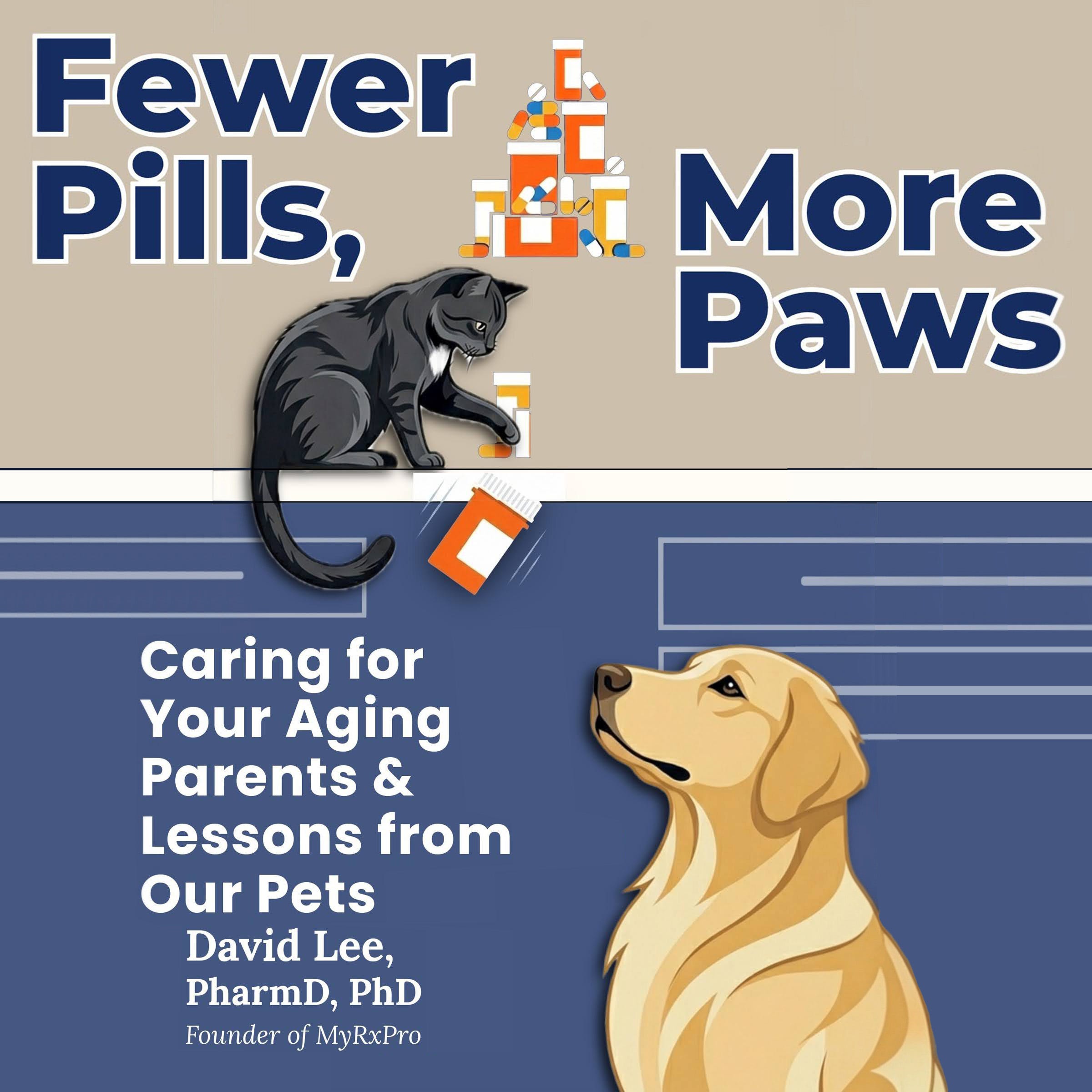
Care partners are finding empowerment in the new book, Fewer Pills More Paw: Caring For Your Aging Parents and Lessons from Our Pets. It’s the roadmap to your new role as the accidental caregiver. Order your copy now!

Soon to be available as an audiobook. Pre-order your copy now!
Looking to Download Tools Today?
Download the Caregivers Toolkit immediately. It contains the very same tools I use for my patients to organize, clarify health goals, and be the most effective advocate for your parent or yourself.
